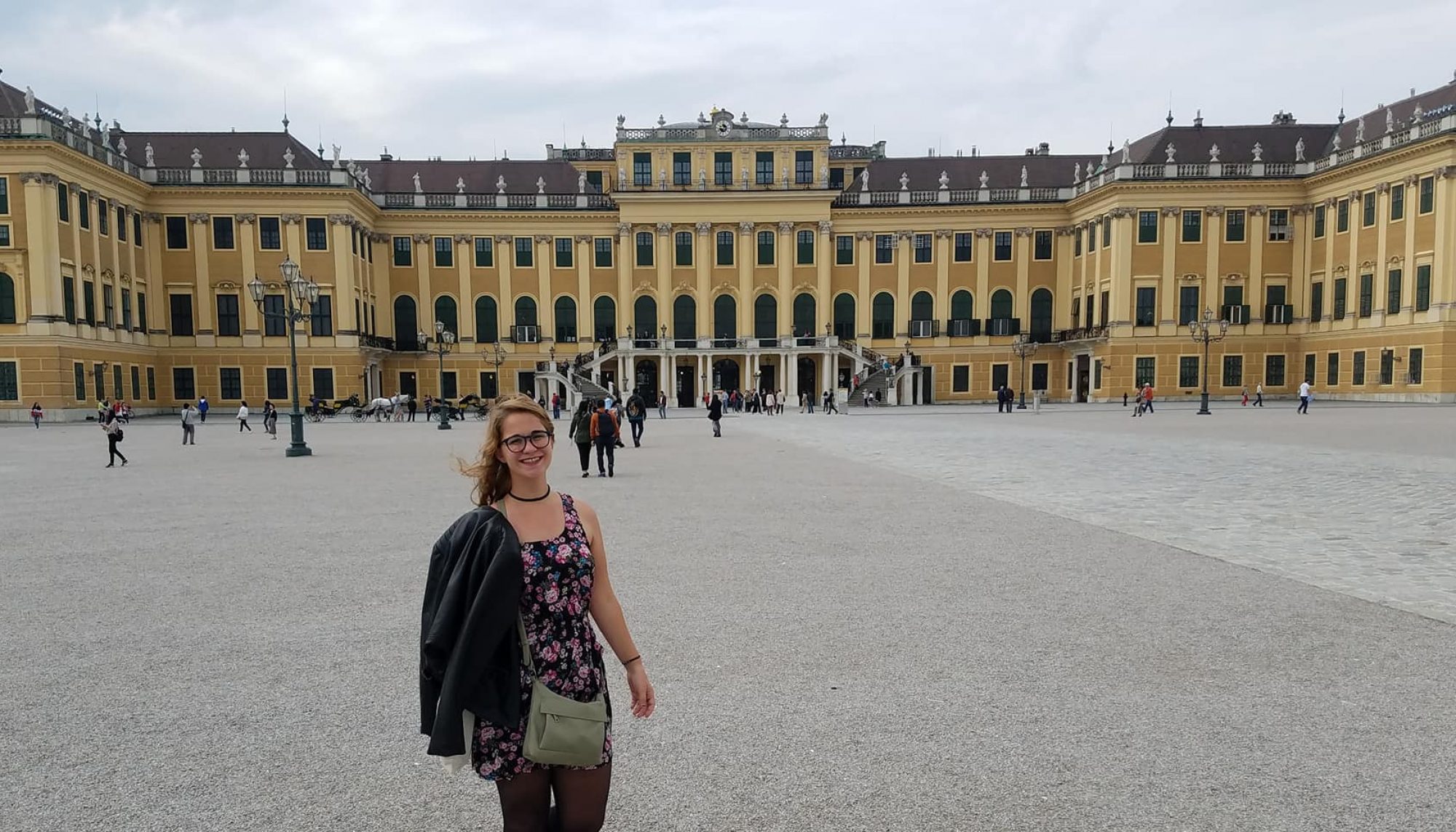
Many people experience an emotional reaction to particular aspects of architecture. When a gold-laden room is illuminated by the natural light streaming through the windows, or Gothic spires tower stories above the ground, or intricate details decorate a building with a million little scenes, it is enough to invoke awe in almost any viewer, even one with no relation to that particular building or its history. The ability of architecture to summon these feelings of spiritual transcendence can be seen in the rising trends of religious tourism, as millions flock to sites around the globe that are understood as architectural wonders, attracting guests of all religious backgrounds to bask in their glory. These buildings have such a profound effect on the millions of tourists that come to visit them, so one can only imagine the meaning they hold for those who use these spaces for their religious purpose. However, the ability of architectural design to express sacredness and spirituality is not unique to the grand monuments that tourists flock to. Even simple and modest religious spaces are often designed in such a way as to hold meaning to those that make use of it. From the design and placement of the windows, to the orientation of the building and its major foci, religious buildings are constructed in ways that will add to and enhance the sacredness and spirituality of the space.
Many religious buildings use explicit religious symbols and stories to adorn their spaces, but the explicit religious representation is not the sole contributor to the experience of sacredness in that space. To some, like Finnish architect Juhani Pallasmaa, it is actually the “artistic qualities, emotions, and associations, irrespective of canonical symbolization,” that cause people to experience sacredness in the space.[1] These artistic qualities that Pallasmaa refers to can include the materials chosen, the purposeful use of both natural and artificial lighting, the symbols and figures etched into the walls, the orientation of entrances, niches, and larger spaces. Such elements can inspire devotion and spirituality in those who view these buildings. According to Kieckhefer, when Russian envoys traveled to Constantinople and encountered the Hagia Sophia in the 10th century, they proclaimed “we know not whether we were in heaven or on earth. For on earth there is no such splendor or such beauty, and we are at a loss how to describe it. We know only that God dwells there among men.”[2] The Hagia Sophia, though certainly a particularly extravagant example, is an example nonetheless of the powerful ability of architectural design to inspire feelings of spirituality and sacredness. The magnitude of the building, its towering height, the expansive interior laden with gold and marble that reflect light from the lamps and windows, the artistically decorated domes – all of these elements contribute to how the 10th century Russian envoys experienced sacredness in that space, an experience likely shared by the millions of people who have entered the Hagia Sophia since its 6th century construction.
Some people, like Pallasmaa, might consider the construction of a building, even a religious building, to be secular, making a distinction between explicitly religious symbols and the seemingly secular design elements of light, material, and shape. The Russian envoys, however, point out the religious sacredness of these potentially secular elements. Buildings constructed for religious purposes are built with an understanding that their design will represent aspects of their religiosity. The use of gold and lighting in the Hagia Sophia was likely intended to invoke the divine. When it comes to spaces that are being designed and built today, we have the fortunate opportunity to understand the religious symbolism of the design according to the architects themselves. Siamak Hariri, designer of the South American Baha’i House of Worship in Santiago, Chile had an entire book published documenting the process of constructing the temple, using photos and his own words to describe the inspiration behind every choice in the process.[3] He took the notion of “embodied light”, which he derived from Baha’i writings on prayer, and he used that idea to guide his choices of materials, structure, and shape.[4] Thus, the temple is able to physically capture and “embody” light, as a practicing Baha’i would experience when their prayers are answered. This demonstrates how the artistic qualities of a religious building’s architecture are specifically chosen in order to reflect religiosity and sacredness as it is understood in that tradition. Even without explicit religious narratives or symbols adorning the space, it meant to invoke specific feelings of sacredness in those for whom it is built.
The notion that the artistic elements
and beauty of a space affect people’s religious experiences is corroborated by
many traditions that encourage the beautification of religious spaces and
objects. Judaism’s formal name for this idea is Hiddur Mitzvah,
understood to mean enhancement or beautification of the divine commandments.[5]
According to Hiddur Mitzvah, a person should go beyond the formal
demands of the law in order to follow commandments with intentionality and
thoughtfulness. The glorification of mitzvot with beauty is meant to
demonstrate a commitment to God, derived from Exodus 15:2, which states, “this
is my God and I will glorify him.”[6]
Judaism is not the only tradition where this notion is seen, as we have already
seen through the Hagia Sophia and the Baha’i House of Worship how design and
art can demonstrate aspects of a relationship with the divine. Therefore,
Pallasmaa’s idea that “the actual experience of sacredness usually arises from
artistic qualities, emotions, and associations, irrespective of canonical
symbolization,” is easily refuted.[7]
The artistic qualities may inspire experiences of sacredness, but they are not
devoid of canonical symbolization. It may be more subtle and implicit in the
design choices, but the architecture of a religious space is purposefully
imbued with religious meaning in order to inspire people to devotion and commitment
to their religion and their ideas of divinity.
[1] Juhani Pallasmaa, “Light, Silence, and Spirituality in Architecture and Art,” in Transcending Architecture: Contemporary Views on Sacred Space, edited by Bermudez, (Washington D.C.: Catholic University of America Press, 2015), 21.
[2] Richard Kieckhefer, “Architectural Expression and Ways of Being Religious”, in The Oxford Handbook of Religion and the Arts, edited by Brown, (New York: Oxford University Press, 2014).
[3] Hariri Pontarini Architects, Embodied Light: The Baha’i Temple of South America, (Boston: Walter de Gruyter GmbH, 2017).
[4] Hariri Pontarini Architects, 20.
[5] “Beautify (Hiddur) Mitzvah”, Jewish Learning Matters, accessed February 22, 2020. https://www.jewishlearningmatters.com/AC1-Beautify-%28Hiddur%29-Mitzvah-1191.aspx
[6] Exodus 15:2
[7] Pallasmaa, 21.

– great intro
– 2nd paragraph really useful quotations
– 3rd paragraph 1st sentence maybe break up into two
– 3rd paragraph maybe try to make more clear – I think you’re trying to emphasize that even though a building may not reflect the religious beliefs of the architect it can have sacredness for the followers who will use the building?
– 4th paragraph a bit confused about what Hiddur Mitzvah is
– Maybe add a broader conclusion to end of paper
– Overall very well written
– Clearly though out argument throughout the entire paper
– Great vocab throughout
This is a really interesting and well written piece. I am trying to come up with some constructive criticism but I am finding it hard. The only thing I would say is the second sentence is really powerful but it think it is a little but long and maybe you should break it up or just take out some of the examples.
– emotional experience between art and architecture is fascinating, love this idea
– in the first paragraph when you’re talking about the tourist attractions that these buildings provide, maybe include an example of one of these architecturally impressive buildings?
-really appreciate your use of quotes from Pallasmaa’s piece, super helpful
– good use of examples to show the elements that provide that “sacred” experience for tourists
-When you say “the use of gold and lighting in the hagia sophia was likely intended to invoke the divine” maybe you could include a quote to prove this intention?
-maybe ease the transition into the Jewish idea of hiddur mitzvah by making more of a connection to a previously mentioned idea?
– would’ve loved to see some concluding thoughts on this idea in general after your last paragraph
– great use of quotes!!!! Perhaps too many though??